



To develop, through community-based participatory research, a community action strategy to address social isolation among older adults living in nursing homes by incorporating the perspectives of all stakeholders. During this diagnostic phase, the aim was to understand the context, strengthen relationships with participants, and identify needs for subsequent phases of the intervention.
MethodCommunity-based participatory research was conducted. This article presents the findings from the diagnostic phase. Seventeen participants took part in three focus groups with residents, family members, professionals, politicians, and community members. A semi-structured interview guide was used. ATLAS.Ti was used for data analysis, and Giorgi's phenomenological method was applied.
ResultsThe main findings encompassed several interrelated areas, including care and well-being, particularly loneliness and the need for meaningful activities; communication and organisation, marked by limited coordination and leadership; community collaboration, especially intergenerational activities and volunteer support; staffing and resources, with particular concerns regarding shortages and work overload; and perceptions of the project, which combined optimism with scepticism. All participants agreed on the importance of ensuring the care and well-being of older adults by reducing social isolation and increasing recreational and social activities. However, additional challenges emerged relating to improving communication and collaboration between different community stakeholders.
ConclusionsEnhancing residents’ well-being requires stronger community networks, improved communication, and better use of local resources. A community action guide may encourage participation and promote a more inclusive care environment.
Desarrollar, mediante investigación participativa basada en la comunidad, una estrategia de acción comunitaria para revertir el aislamiento social en personas mayores residentes en centros sociosanitarios, incorporando la perspectiva de los agentes implicados y, en esta fase diagnóstica, comprender el contexto, fortalecer el vínculo con las personas participantes e identificar necesidades para fases posteriores de acción.
MétodoInvestigación participativa basada en la comunidad. Este artículo presenta los resultados de la fase de diagnóstico. Diecisiete participantes se unieron a tres grupos focales con residentes, familiares, profesionales, políticos y ciudadanos. Se utilizó un guion semiestructurado. Se empleó ATLAS.Ti para el análisis de datos y se aplicó el método de Giorgi.
ResultadosSurgieron cinco categorías: cuidado y bienestar, centrada en la soledad y la necesidad de actividades significativas; comunicación y organización, caracterizada por una coordinación y un liderazgo limitados; colaboración comunitaria, que destaca las actividades intergeneracionales y el apoyo de los voluntarios; recursos y personal, en la que se señalan la escasez y la sobrecarga; y expectativas del proyecto, que combina el entusiasmo con las dudas. Todos los participantes coincidieron en la importancia de garantizar el cuidado y el bienestar de las personas mayores reduciendo el aislamiento social y aumentando las actividades recreativas y sociales. Sin embargo, han surgido otros retos relacionados con la mejora de la comunicación y la colaboración entre los diferentes profesionales de la comunidad.
ConclusionesMejorar el bienestar de los residentes requiere redes comunitarias más sólidas, una mejor comunicación y un mejor uso de los recursos locales. Una guía de acción comunitaria puede fomentar la participación y promover un entorno más inclusivo.
As people age, particularly after retirement, participation in society, a key expression of citizenship, may become limited. This is particularly critical for people living in long-term care facilities.1
It is important to find ways for older adults in general, and those living in nursing homes in particular, to fully exercise their rights as citizens.2 Scientific evidence suggests high levels of social isolation among people living in nursing homes due to multiple factors, including the heterogeneity of residents, many of whom have physical or cognitive impairments, distance from social support networks, and organisational characteristics of nursing homes, such as schedules, shared spaces and, in some cases, geographical isolation. These factors may increase residents’ vulnerability to both social isolation and loneliness.3 In the case of people living in nursing homes, social isolation is related to the loss of community ties after admission, which has an effect on their quality of life and that of their families.4,5
One potential strategy to address this situation is to improve community support for the residents of these facilities by strengthening people's sense of control over their lives and circumstances.6 Participation in community activities can increase life expectancy by up to 5 years.7 In a systematic review, all included studies demonstrated a positive effect of community activities on participants, suggesting the potential of social interventions among older adults living in nursing homes for both personal and community benefits.8 The community may act both as a source of resources and assets and as a recipient of the contributions that nursing home residents can offer in return.9 This is key to reversing the current situation of those who often spend the last stage of their lives in institutional care. Despite the dual nature of nursing homes as both care institutions and residents’ permanent homes, those who live there are rarely involved in the planning of community activities.10
The community-based participatory research framework11 underpinning this study aims to promote a community action strategy to address this situation by drawing on information provided by different community stakeholders and focusing on those most directly affected by social isolation, namely older adults living in nursing homes.6
Community-based participatory research consists of five phases: problem identification and definition, participatory diagnosis, action planning, implementation (action phase), evaluation, and ongoing reflection and replanning (continuous cycle). The findings presented in this article relate to the first phase of the study, which sought to answer the research question: “What are the needs of older people in nursing homes, and what is the context for undertaking community initiatives that facilitate their participation and social integration beyond the nursing home?”.
The purpose of this phase is not only to understand the general context of the study, but also to get closer to the people involved and encourage debate on the feasibility of undertaking community actions in their environment.12 This includes identifying first-hand the needs for subsequent phases of action and transformation.13
Therefore, the main objective of this study was to understand the context, strengthen relationships with participants, and identify needs for subsequent phases of action.
MethodStudy designCommunity-based participatory research14 was implemented. Its first phase involved an exploratory, qualitative study with a phenomenological approach aimed at understanding the context and diagnosing the situation.
Setting and sampleA total of 17 participants took part in three focus groups. Key informants were selected according to their involvement in community actions within the study setting and their connection to the nursing home for older adults. Participants included residents, relatives and friends, nursing home staff, representatives from community centres for older adults, local politicians, and professionals from both the health and social sectors. To ensure broader social representation, efforts were made to maintain the consistent application of the selection criteria and diversity in participant profiles.
Data collectionFocus groups were used for data collection. These enabled the exploration of participants’ diverse perspectives, perceptions, and experiences through moderated group discussions15 until data saturation was reached through the recurrence of themes and ideas.16
The meetings were held at the nursing home and in different community facilities. They lasted approximately 90minutes, were recorded, and field notes were taken following participants’ informed consent. A semi-structured interview guide was used to explore and identify the needs, barriers and facilitators for improvement in the relationships between the nursing home and its surrounding community (see Appendix A in Supplementary Material). Emerging themes identified during each meeting helped to guide subsequent meetings and inform potential lines of action.14
The research team consisted of university faculty members and healthcare professionals with expertise in qualitative research and community-based participatory research.
Data analysisFor the data analysis, ATLAS.ti was used, following Giorgi's phenomenological method.17 The collected transcripts and field notes served as the basis for a comprehensive reading by three researchers working independently. The data were analysed in their entirety, and meaning units were identified, classified, and coded into themes and subthemes. The findings were discussed and agreed upon among the research team.
The complementarity between community-based participatory research and Giorgi's phenomenological analysis enabled the integration of community participation into the analysis of lived experiences. It also contributed interpretive depth to the analytical process.
Credibility was enhanced through the inclusion of diverse participants in the focus groups, enabling multiple perspectives on the phenomenon under study. Dependability was strengthened through a systematic three-phase analysis involving sequential review. Researcher triangulation further strengthened the consistency and validity of the findings.
Ethics of the researchThe study complied with the Declaration of Helsinki and Organic Law 3/2018 and was approved by an ethics committee (1849-N-22). Data were used exclusively for research purposes. Participation was voluntary and all participants provided informed consent and retained the right to withdraw at any time.
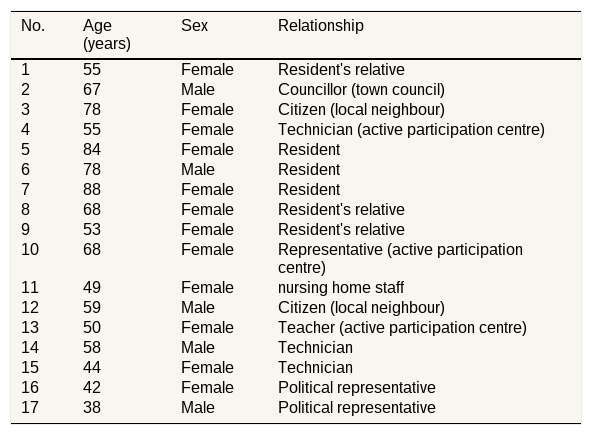
ResultsA total of 17 participants took part in this study, with a mean age of 61 years (standard deviation: 14.48; range: 38–88 years), representing different local institutions. A summary of the sociodemographic characteristics is presented in Table 1.
Sociodemographic characteristics of the participants.
| No. | Age (years) | Sex | Relationship |
|---|---|---|---|
| 1 | 55 | Female | Resident's relative |
| 2 | 67 | Male | Councillor (town council) |
| 3 | 78 | Female | Citizen (local neighbour) |
| 4 | 55 | Female | Technician (active participation centre) |
| 5 | 84 | Female | Resident |
| 6 | 78 | Male | Resident |
| 7 | 88 | Female | Resident |
| 8 | 68 | Female | Resident's relative |
| 9 | 53 | Female | Resident's relative |
| 10 | 68 | Female | Representative (active participation centre) |
| 11 | 49 | Female | nursing home staff |
| 12 | 59 | Male | Citizen (local neighbour) |
| 13 | 50 | Female | Teacher (active participation centre) |
| 14 | 58 | Male | Technician |
| 15 | 44 | Female | Technician |
| 16 | 42 | Female | Political representative |
| 17 | 38 | Male | Political representative |
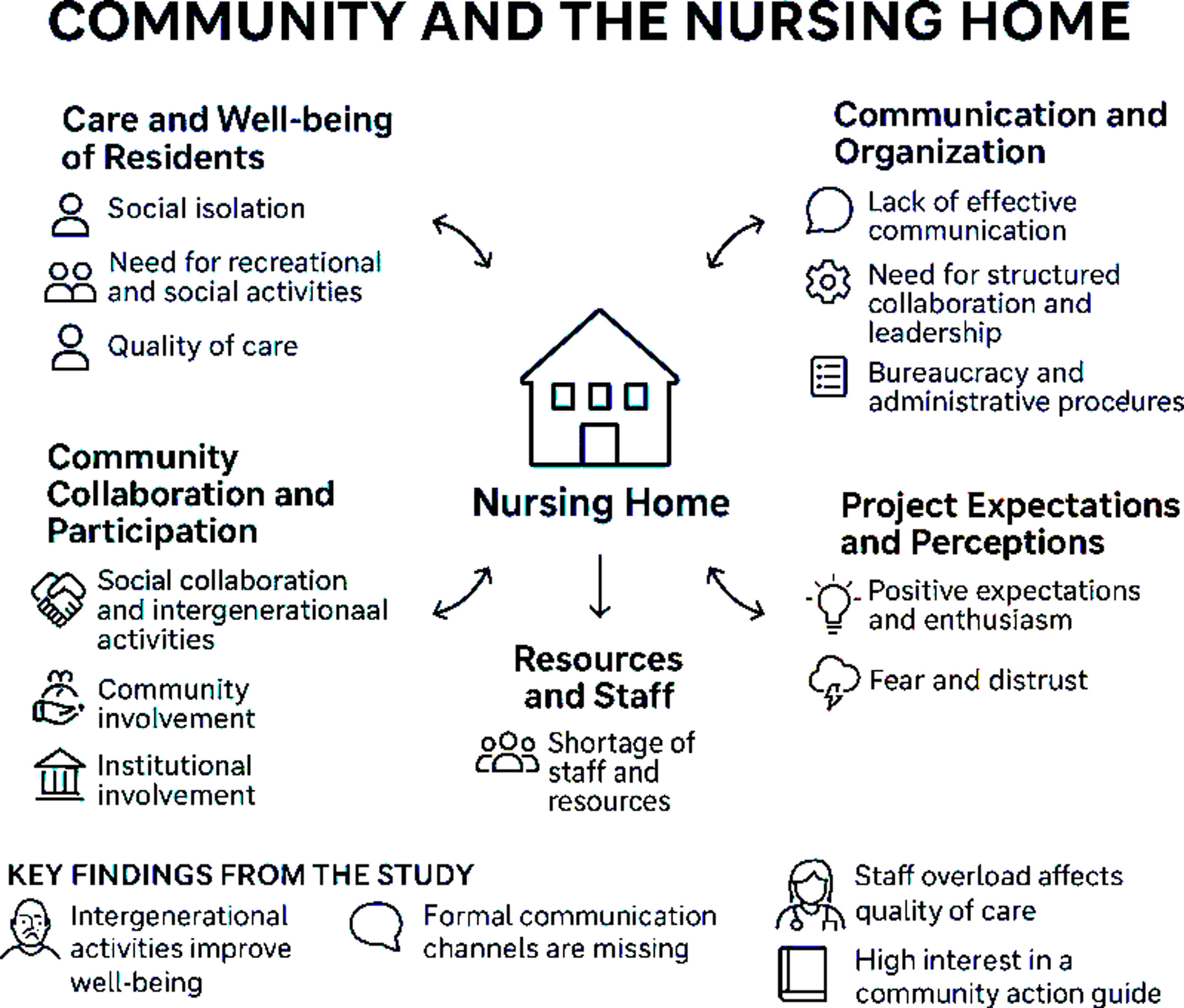
Analysis of the focus group data led to the identification of five themes and thirteen subthemes.
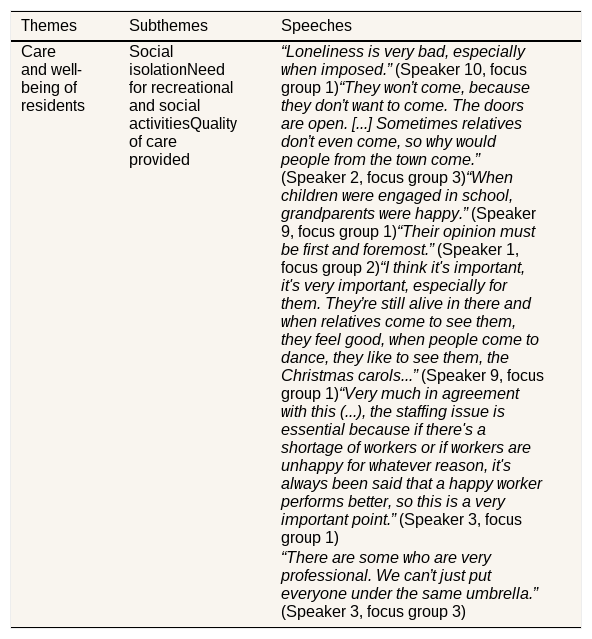
Care and well-beingCare and well-being emerged as one of the main themes identified in participants’ accounts. This theme includes the subthemes shown in Table 2.
Themes and subthemes related to care and well-being of residents.
| Themes | Subthemes | Speeches |
|---|---|---|
| Care and well-being of residents | Social isolationNeed for recreational and social activitiesQuality of care provided | “Loneliness is very bad, especially when imposed.” (Speaker 10, focus group 1)“They won’t come, because they don’t want to come. The doors are open. [...] Sometimes relatives don’t even come, so why would people from the town come.” (Speaker 2, focus group 3)“When children were engaged in school, grandparents were happy.” (Speaker 9, focus group 1)“Their opinion must be first and foremost.” (Speaker 1, focus group 2)“I think it's important, it's very important, especially for them. They’re still alive in there and when relatives come to see them, they feel good, when people come to dance, they like to see them, the Christmas carols...” (Speaker 9, focus group 1)“Very much in agreement with this (...), the staffing issue is essential because if there's a shortage of workers or if workers are unhappy for whatever reason, it's always been said that a happy worker performs better, so this is a very important point.” (Speaker 3, focus group 1) |
| “There are some who are very professional. We can’t just put everyone under the same umbrella.” (Speaker 3, focus group 3) |
Social isolation was identified as a critical factor that negatively affected the emotional well-being of the residents. Participants emphasised the need to foster meaningful social relationships so as to combat unwanted loneliness.
Need for recreational and social activitiesSocial, recreational, and physical well-being activities were widely valued as essential elements in promoting residents’ overall well-being. These activities not only contribute to their physical, psychological and emotional well-being, but also help residents feel active and valued through participation.
The importance of involving residents in decision-making for these activities was also underlined. Situations where residents receive visits or participate in group activities were described as particularly significant.
Quality of careAlthough care was generally perceived positively, work overload was identified as a factor that could compromise care quality.
Staff professionalism was acknowledged, although differences in the quality of care provided by individual professionals were noted.
Communication and organisationParticipants emphasized the importance of establishing clear communication channels, promoting active participation and fostering collaborative work to achieve meaningful improvements in residents’ well-being.
One of the difficulties identified was the perceived disconnect between planned actions and their implementation, which hindered coordination and follow-up.
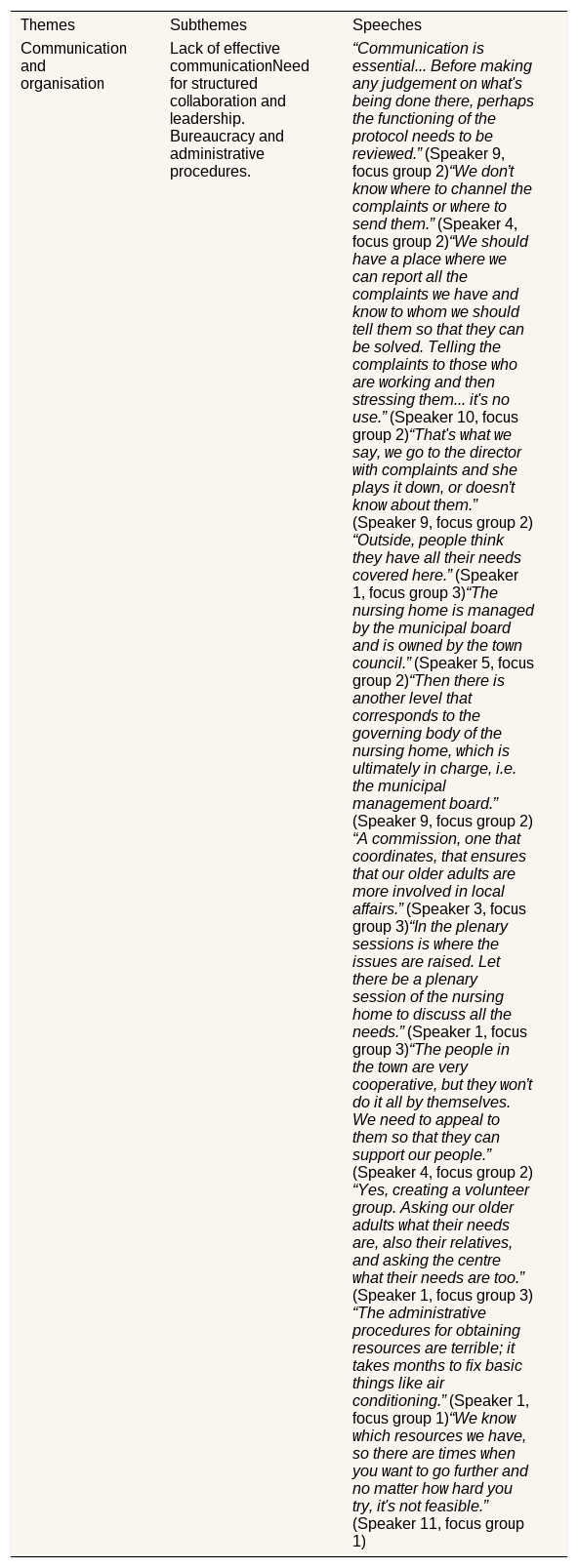
The subthemes that emerged are shown in Table 3.
Themes and subthemes related to communication and organisation.
| Themes | Subthemes | Speeches |
|---|---|---|
| Communication and organisation | Lack of effective communicationNeed for structured collaboration and leadership.Bureaucracy and administrative procedures. | “Communication is essential... Before making any judgement on what's being done there, perhaps the functioning of the protocol needs to be reviewed.” (Speaker 9, focus group 2)“We don’t know where to channel the complaints or where to send them.” (Speaker 4, focus group 2)“We should have a place where we can report all the complaints we have and know to whom we should tell them so that they can be solved. Telling the complaints to those who are working and then stressing them... it's no use.” (Speaker 10, focus group 2)“That's what we say, we go to the director with complaints and she plays it down, or doesn’t know about them.” (Speaker 9, focus group 2)“Outside, people think they have all their needs covered here.” (Speaker 1, focus group 3)“The nursing home is managed by the municipal board and is owned by the town council.” (Speaker 5, focus group 2)“Then there is another level that corresponds to the governing body of the nursing home, which is ultimately in charge, i.e. the municipal management board.” (Speaker 9, focus group 2)“A commission, one that coordinates, that ensures that our older adults are more involved in local affairs.” (Speaker 3, focus group 3)“In the plenary sessions is where the issues are raised. Let there be a plenary session of the nursing home to discuss all the needs.” (Speaker 1, focus group 3)“The people in the town are very cooperative, but they won’t do it all by themselves. We need to appeal to them so that they can support our people.” (Speaker 4, focus group 2)“Yes, creating a volunteer group. Asking our older adults what their needs are, also their relatives, and asking the centre what their needs are too.” (Speaker 1, focus group 3)“The administrative procedures for obtaining resources are terrible; it takes months to fix basic things like air conditioning.” (Speaker 1, focus group 1)“We know which resources we have, so there are times when you want to go further and no matter how hard you try, it's not feasible.” (Speaker 11, focus group 1) |
Participants’ responses highlighted the importance of communication among different community agents in ensuring effective collaboration. A lack of communication between the local authorities, citizens, and professionals was identified, which may hinder effective coordination and collaboration between community agents. Likewise, the absence of official channels through which staff and residents can express complaints, concerns, or suggestions may hinder open communication and transparency in the management of the long-term care facility.
Need for structured collaboration and leadershipInter-institutional coordination was perceived as insufficient, which may hinder the implementation of integrated policies and programmes. Participants expressed the need for greater information on residents’ needs to be provided by the relevant bodies of the Town Council, the institution responsible for managing this service.
Participants agreed on the community's solidarity and willingness to help, although they reported a lack of guidance regarding whom to contact and how to offer support effectively. The need for a formal structure to channel this support was also highlighted.
Bureaucracy and administrative proceduresInformants generally perceived administrative formalities and procedures as complex and slow. This indicates a need to review bureaucratic procedures in order to optimise care and quality of life in the facility.
Community collaboration and participationThe importance of using resources available within the nursing home and the surrounding community was recognized, reflecting a collaborative approach.
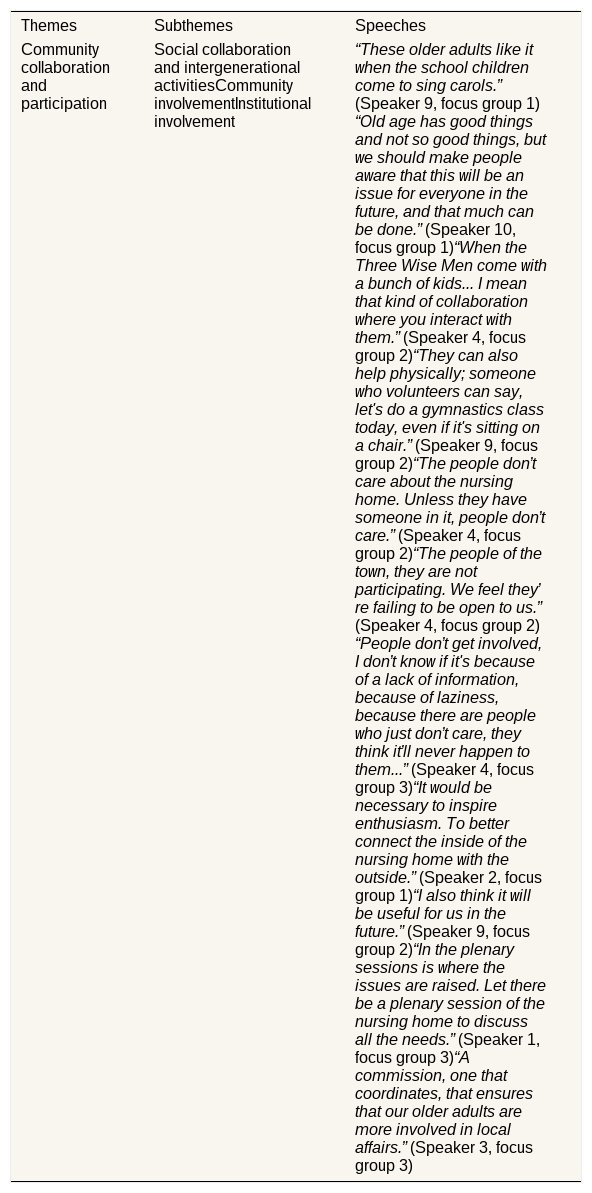
Three subthemes emerged from this category are discussed in Table 4.
Themes and subthemes related to community collaboration and participation.
| Themes | Subthemes | Speeches |
|---|---|---|
| Community collaboration and participation | Social collaboration and intergenerational activitiesCommunity involvementInstitutional involvement | “These older adults like it when the school children come to sing carols.” (Speaker 9, focus group 1)“Old age has good things and not so good things, but we should make people aware that this will be an issue for everyone in the future, and that much can be done.” (Speaker 10, focus group 1)“When the Three Wise Men come with a bunch of kids... I mean that kind of collaboration where you interact with them.” (Speaker 4, focus group 2)“They can also help physically; someone who volunteers can say, let's do a gymnastics class today, even if it's sitting on a chair.” (Speaker 9, focus group 2)“The people don’t care about the nursing home. Unless they have someone in it, people don’t care.” (Speaker 4, focus group 2)“The people of the town, they are not participating. We feel they’re failing to be open to us.” (Speaker 4, focus group 2)“People don’t get involved, I don’t know if it's because of a lack of information, because of laziness, because there are people who just don’t care, they think it’ll never happen to them...” (Speaker 4, focus group 3)“It would be necessary to inspire enthusiasm. To better connect the inside of the nursing home with the outside.” (Speaker 2, focus group 1)“I also think it will be useful for us in the future.” (Speaker 9, focus group 2)“In the plenary sessions is where the issues are raised. Let there be a plenary session of the nursing home to discuss all the needs.” (Speaker 1, focus group 3)“A commission, one that coordinates, that ensures that our older adults are more involved in local affairs.” (Speaker 3, focus group 3) |
Participants emphasised that intergenerational relationships are mutually beneficial. Older adults feel recognised and valued by younger generations and enjoy their presence, while younger people, in turn, learn to value the experience and wisdom of older adults. The pedagogical value of understanding the realities of ageing, as well as appreciating life and quality of life, was also highlighted.
Community involvementParticipants’ accounts suggested a perceived lack of community involvement and a limited sense of collective responsibility towards the nursing home. This disconnection between the community and the nursing home was presented as a phenomenon rooted in a general detachment from the ageing process and a lack of community interest.
The respondents expressed a desire for a long-term symbiotic relationship between the nursing home and the local community that would be beneficial for both parties. The current situation was perceived to stem largely from a lack of awareness. Greater clarification and guidance were considered necessary regarding how citizens can effectively contribute to the well-being of nursing home residents while ensuring legality and safety in their actions.
Institutional involvementIn line with the above, participants reported a lack of active support from the Town Council and social services. This situation was perceived to generate feelings of abandonment among relatives and staff, suggesting the need for a stronger support structure and closer supervision. The administration was regarded as a crucial element.
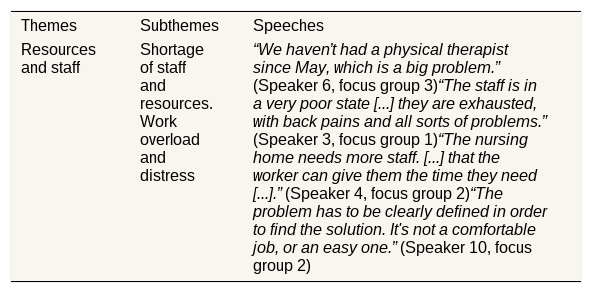
Resources and staffThis theme was described as another key element. Two specific subthemes emerged within this theme are shown in Table 5.
Themes and subthemes related to resources and staff.
| Themes | Subthemes | Speeches |
|---|---|---|
| Resources and staff | Shortage of staff and resources.Work overload and distress | “We haven’t had a physical therapist since May, which is a big problem.” (Speaker 6, focus group 3)“The staff is in a very poor state [...] they are exhausted, with back pains and all sorts of problems.” (Speaker 3, focus group 1)“The nursing home needs more staff. [...] that the worker can give them the time they need [...].” (Speaker 4, focus group 2)“The problem has to be clearly defined in order to find the solution. It's not a comfortable job, or an easy one.” (Speaker 10, focus group 2) |
Insufficient qualified staff and structural resources were identified as significant challenges, together with inadequate cover for sick leave and role rotation, issues affecting both the quality of care provided to nursing home residents and the well-being of staff.
Work overload and distressCaring for older adults can be physically and emotionally demanding. Work overload was described as contributing to burnout and demotivation among staff.
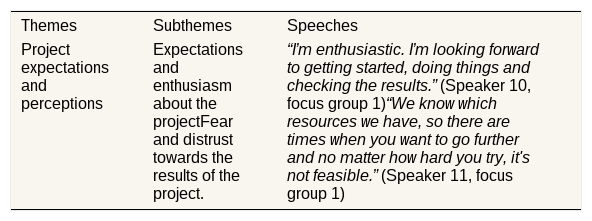
Expectations and perceptions about the community action guide projectThe informants involved held different expectations regarding the project (Table 6).
Themes and subthemes related to project expectations and perceptions.
| Themes | Subthemes | Speeches |
|---|---|---|
| Project expectations and perceptions | Expectations and enthusiasm about the projectFear and distrust towards the results of the project. | “I’m enthusiastic. I’m looking forward to getting started, doing things and checking the results.” (Speaker 10, focus group 1)“We know which resources we have, so there are times when you want to go further and no matter how hard you try, it's not feasible.” (Speaker 11, focus group 1) |
Some of the participants expressed optimism and enthusiasm for the project, believing in its potential impact and its capacity to bring about meaningful change.
Fear and distrustOn the other hand, a significant degree of scepticism also emerged, especially with regard to the short-term viability of the project. This feeling was related to the perception of limitations in the availability of resources.
DiscussionThe main objective of the diagnostic phase of community-based participatory research was to understand the context, strengthen relationships with participants, and identify needs for subsequent action phases. The main findings related to the following areas: care and well-being, particularly loneliness and the need for meaningful activities; communication and organisation, characterised by limited coordination and leadership; community collaboration, highlighting intergenerational activities and volunteer support; resources and staff, noting shortages and overload; and expectations regarding the project, combining enthusiasm with doubts.
All participants agreed on the importance of ensuring the care and well-being of older people by reducing social isolation and increasing recreational and social activities. Ageing was recognised as a major societal challenge. It therefore emerges as a social issue requiring reflection and public debate.18
These findings highlight the importance of supporting cognitive and emotional stimulation among older adults to promote well-being, independence, and quality of life. This issue concerns the wider community19 and poses complex challenges for nursing homes.20
Work overload and insufficient resources affect the quality of care, as well as the well-being and health of staff.21 Previous research suggests that investment in staff and support programmes improves both job satisfaction and residents’ health outcomes.22,23 Studies such as that by Raciti et al.24 point to psychosocial support programmes for employees as strategies for improvement.
On the other hand, variability in the quality of care was also reported and attributed to individual commitment and training, pointing to a lack of regulation, standardisation, and oversight.22 The absence of oversight and coordination by relevant authorities, coupled with the bureaucratic burden, is identified as a primary factor hindering the effectiveness of public policies in nursing homes.18,25
The findings indicate a lack of communication between the different stakeholders involved in the management of the nursing home, which affects the efficiency of the service and the implementation of successful community projects.26 Connections with community networks and socio-community institutions were recognised as key drivers of effective collaboration. The need for effective leadership and formal channels of communication highlights the importance of integrated management approaches promoted by the relevant authorities.25
Related to social isolation and unwanted loneliness, the diagnostic findings from the nursing home reflect common problems in institutions for older adults. These results are consistent with recent studies on the prevalence of loneliness in nursing homes, where it is estimated that between 35% and 61% of residents experience moderate to severe feelings of loneliness, affecting their psychological and physical well-being.27,28 Both social isolation and unwanted loneliness are factors associated with significant negative effects on the health of the older person, including cognitive decline, depression, and increased mortality. For example, chronic loneliness has been associated with persistent inflammation, an increased risk of heart disease, accelerated neurocognitive decline, the development of Alzheimer's disease and other disorders, and increased mortality.28,29 Moreover, these factors influence the immune system by weakening it and contributing to the proliferation of chronic diseases19.
Effective interventions have been shown to mitigate these effects, including the promotion of social networks and community programmes that foster meaningful relationships.30 Research indicates that strengthening social and intergenerational ties reduces these risks and significantly improves longevity and emotional well-being.30,31 In this context, initiatives such as solidarity networks and compassionate cities have emerged. These initiatives involve community-based networks aimed at supporting people in vulnerable situations.32
Thus, participants’ perception of limited community involvement underlines the importance of a collaborative approach to geriatric care. The literature also supports the effectiveness of volunteer programmes and intergenerational activities with schools in reducing social disconnection and improving the quality of life of older adults.33
As for expectations and perspectives for community change, it is particularly relevant given the community-based participatory research approach adopted in this study, which directly and actively involves participants. Collaborative processes in communities foster a sense of belonging and empowerment among participants, which translates into active engagement and optimism towards the project.20 At the same time, the scepticism shown by other participants, especially with regard to the short-term viability of the project, is also common in the implementation of community action projects owing to the initial uncertainty about resources.34 In community-based participatory research, challenges related to sustainability must be addressed early on to build trust among participants.35
LimitationsThis study has some limitations. First, the use of focus groups with purposive sampling limits the generalisability of the results. Furthermore, group dynamics and potential social desirability may have influenced the responses collected. In addition, as this is a diagnostic phase within the framework of community-based participatory research, it is possible that not all relevant perspectives were captured, especially those of underrepresented groups. Nevertheless, these findings provide a contextualised basis for the development of interventions tailored to the identified needs. Figure 1
Conclusions
This study highlights the need for deeper reflection on population ageing and its local implications. Findings suggest that nursing homes would benefit from coordinated community-based strategies aimed at improving residents’ well-being, strengthening communication and organisational processes, enhancing collaboration with community resources, and supporting staff through adequate resources, training, and improved working conditions.
The results also support the development of community networks and the identification of local health assets to strengthen connections between nursing homes and their surrounding communities. In this sense, the proposed community action guide may contribute to more inclusive, participatory, and sustainable care environments for older adults.
Finally, this project provides a transferable framework that could be adapted to similar nursing home settings and guide future community-based interventions.
Older adults living in nursing homes frequently experience social isolation and loneliness, negatively affecting their health and quality of life. Although community and intergenerational activities enhance well-being, organisational barriers and weak community ties limit their use.
What does this study add to the literature?This study provides a qualitative, participatory diagnosis of nursing home–community relationships, incorporating multiple stakeholders’ perspectives. It identifies keys to guide community action.
What are the implications of the results?Results support developing structured, participatory community interventions, improving communication and institutional support, and addressing staff workload to reduce isolation and enhance residents’ well-being.
Data are available from the corresponding author upon reasonable request.
Editor in chargeJosé Manuel Jiménez Rodríguez.
Transparency declarationThe corresponding author, on behalf of the other authors guarantee the accuracy, transparency and honesty of the data and information contained in the study, that no relevant information has been omitted and that all discrepancies between authors have been adequately resolved and described.
Authorship contributionsJ. Cabrera-Troya and M.D. Ruíz-Fernández participated in the conception and design of the study and drafted the first version of it. J. Cabrera-Troya, A. Alfaro-Gabarro, O. Ibáñez-Masero and F.M. García-Padilla participated in the development of the study and analysis of data. A.M. Ortega-Galán, M.D. Ruíz-Fernández and J. Cabrera-Troya revised critically the draft of the manuscript. A.M. Ortega-Galán, M.D. Ruíz-Fernández, F.M. García-Padilla, O. Ibáñez-Masero, A. Alfaro-Gabarro and J. Cabrera-Troya participated in the data collection and next to they made the final version of the manuscript.
AcknowledgementsThe authors would like to thank the participants for their efforts to participate in this study, taking into account the overloaded workload they were subjected to during the study.
FundingThis study is under support of the Andalusian regional government by Fundación Progreso y Salud with the number AP-0341-2022-C3-F2 into the project “Participatory elaboration of a community action guide to nurse homes”.
Conflicts of interestNone.