



To develop and asses the usability of a Spanish-language mobile application (PreveCan) to educate the public about the World Cancer Research Fund (WCRF) and American Institute for Cancer Research (AICR) recommendations for cancer prevention.
MethodThe app was developed using a user-centred design approach involving epidemiology, medical, nutrition and software design experts and public. PreveCan educates users on WCRF/AICR recommendations rating their adherence from 1 (poor) to 5 (excellent), offering advice for improvement and evidence-based additional information on the relationship between lifestyles and cancer. Usability was assessed in a cross-sectional study of 181 participants using a translated version of the 20-item mHealth App Usability Questionnaire, which rated ease of use and satisfaction, information layout, and overall usefulness of PreveCan on 1-5 scale.
ResultsGeneral usability of PreveCan was rated highly, with a median score of 94/100 (IQR: 85-99). Ease of use and satisfaction scored 39/40 (IQR: 35-40), with 87% of users rating all items ≥4 points. Information organization scored 33/35 (IQR: 30-35), with 83% of users rating ≥4. Usefulness was rated ≥4 by 77% of users, but satisfaction was slightly lower (22/25; IQR: 20-25). Common feedback highlighted the need for a standardized response format and stronger incentives to encourage regular use. Based on this, PreveCan was updated and is freely available on Google Play and the Apple Store.
ConclusionsPreveCan is a useful tool to inform Spanish-speaking users on lifestyle changes to reduce cancer risk by assessing adherence to WCRF/AICR cancer prevention guidelines.
Desarrollar y evaluar la usabilidad de una aplicación móvil en español (PreveCan) para educar sobre las recomendaciones de la World Cancer Research Fund (WCRF) y el American Institute for Cancer Research (AICR) para la prevención del cáncer.
MétodoLa aplicación se desarrolló utilizando un enfoque de diseño centrado en el usuario, involucrando a personas expertas en epidemiología, medicina, nutrición y diseño de software, así como a público general. PreveCan educa a las personas usuarias sobre las recomendaciones, calificando su adherencia de 1 (mala) a 5 (excelente) y ofreciendo consejos para aumentarla, junto con información basada en la evidencia acerca de la relación entre los estilos de vida y el cáncer. La usabilidad fue evaluada por 181 participantes, utilizando la versión traducida al español del Mobile Health App Usability Questionnaire de 20 ítems, que mide en una escala del 1 al 5 la facilidad de uso y la satisfacción, la organización de la información y la utilidad de la aplicación percibida.
ResultadosLa usabilidad de PreveCan fue muy bien valorada, con una puntuación mediana de 94/100 (RIC: 85-99). La facilidad de uso y la satisfacción obtuvieron 39/40 (RIC: 35-40), y el 87% de las personas usuarias calificaron todos los ítems con ≥4 puntos. La organización de la información obtuvo 33/35 (RIC: 30-35), siendo valorada con ≥4 por el 83% de las personas participantes. La utilidad fue calificada con ≥4 por el 77%, pero la satisfacción fue ligeramente inferior (22/25; RIC: 20-25). Los comentarios comunes destacaron la necesidad de un formato de respuesta estandarizado y de incentivos más sólidos para fomentar el uso regular. Basándose en esto, PreveCan se actualizó y está disponible gratuitamente en Google Play y Apple Store.
ConclusionesPreveCan es una herramienta útil para informar a hispanohablantes sobre el estado actual y los cambios en los estilos de vida para reducir el riesgo de cáncer.
Cancer remains a major cause of premature death worldwide, ranking as the first or second leading cause of death in 112 out of 183 countries in 2019.1 Worldwide, an estimated 18.7 million new cancer cases and 9.7 million cancer deaths occurred in 2022.2 The latest estimates indicate that over 50% of cancer cases could potentially be prevented with adequate lifestyles related to tobacco and alcohol use, weight and diet.3
The World Cancer Research Fund (WCRF) and the American Institute for Cancer Research (AICR) provide eight general and two special recommendations on diet, physical activity, and weight management for cancer prevention.4 Adhering to these guidelines has shown a beneficial effect on reducing cancer risk, according to various studies.5,6 The WCRF/AICR also offers a web-based “Cancer Health Check”7 tool to help individuals assess their adherence to these recommendations. However, it is only available in English and lacks specific guidelines on how to improve lifestyle habits, even though this information is available in the WCRF website.8 Additionally, it does not provide comprehensive insights on the scientific evidence linking these guidelines to cancer prevention, despite such information being available through the WCRF's Continuous Update Project.9
In Spain, awareness of lifestyle factors affecting cancer risk is relatively low, as highlighted by the 2020 Spanish Onco-barometer survey.10 This emphasizes a need for accessible, comprehensive tools that educate and guide users on effective prevention measures. Mobile health (mHealth) apps providing easy-to-access, interactive, evidence-based information have proven useful for public health education.11–14 Yet, the effectiveness of mHealth apps can be limited by issues such as hidden costs, data entry burdens, and declining user engagement over time.15 Therefore, evaluating usability before launch is crucial to ensure users find the app intuitive and beneficial.
Apps to promote behaviour changes related to lifestyle habits such as physical activity or nutrition are available in Spanish stores.16,17 However, only a few provide behavioural education and most of them lack scientific backing. To our knowledge, there is no other applications in the Spanish market to inform, evaluate and offer guidance to improve the adherence to the WCRF/AICR cancer prevention recommendations.
The aim of the present study is: 1) to describe the development of a Spanish-language mobile application (PreveCan) designed to provide user-friendly access to information and guidance on lifestyle improvements that can reduce cancer risk though the evaluation of the adherence to the WCRF/AICR cancer prevention recommendations, and 2) to carry out a usability study of the application among the general public.
MethodPreveCan targets adults aged 18 and older, focusing on individuals at average cancer risk who want to improve their knowledge and practices around cancer prevention. Designed for the general population regardless of sex or gender, it requires no prior medical knowledge and suits users with basic digital literacy and smartphone access. The app was culturally tailored for the Spanish population through several steps: 1) selection of food types and portion sizes typical of the Spanish diet; 2) use of meal patterns and terminology familiar in Spain; and 3) review of all materials by native Spanish-speaking health professionals to ensure linguistic and cultural appropriateness.
The development followed a user-centred design approach with iterative phases: 1) initial design and prototyping by a multidisciplinary expert team, and 2) usability testing with external users and refinement based on feedback. This process allowed users to influence navigation, content, and feedback features.
Design of the beta version of PreveCanThe first version (beta version) of the PreveCan app was designed by a multidisciplinary team of experts, including four cancer epidemiologists, one medical doctor, one clinical dietitian-nutritionist, one public health researcher, and one software engineer.
- 1)
Question definition
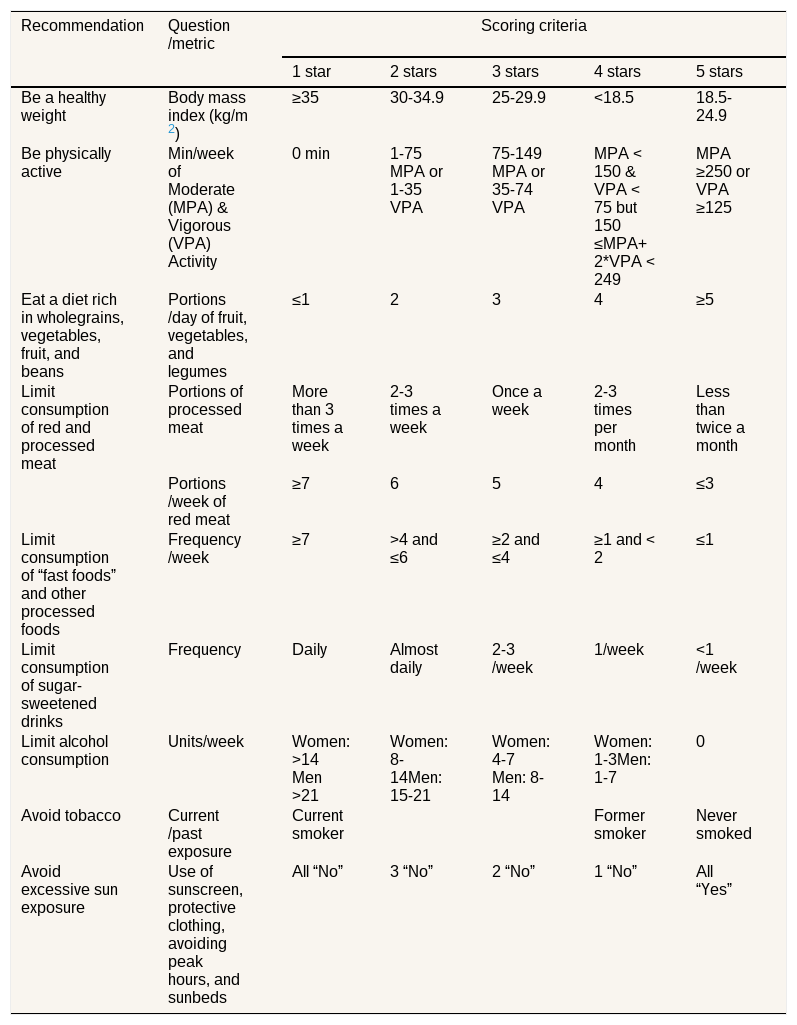
Following the 2018 WCRF/AICR4 and in resemblance with the questions used in a brief screening tool developed and validated to assess adherence to WCRF/AICR guidelines within a Spanish context,18 we formulated a set of questions to assess adherence to 7 of the 8 general recommendations: maintain a healthy weight; be physically active; eat a better diet; limit the intake of processed foods; limit red and processed meat; limit sugar-sweetened drinks; and limit alcohol consumption (Table 1). The general recommendation on supplement intake (hard to collect simply) and the two additional recommendations on breastfeeding and cancer survivors (group-specific) were excluded. However, summaries and reports in PreveCan still include information on all recommendations. The app also collects biological sex data for sex-specific alcohol guidance and two questions about, tobacco and sun exposure also related to cancer risk. It is important to note that, in accordance with the privacy policy, no data entered into the application is processed externally. All data is stored exclusively on the user's personal device.
Assessment of adherence to the WCRF/AICR cancer prevention recommendations in the PreveCan app.
| Recommendation | Question/metric | Scoring criteria | ||||
|---|---|---|---|---|---|---|
| 1 star | 2 stars | 3 stars | 4 stars | 5 stars | ||
| Be a healthy weight | Body mass index (kg/m2) | ≥35 | 30-34.9 | 25-29.9 | <18.5 | 18.5-24.9 |
| Be physically active | Min/week of Moderate (MPA) & Vigorous (VPA) Activity | 0 min | 1-75 MPA or 1-35 VPA | 75-149 MPA or 35-74 VPA | MPA <150 & VPA <75 but 150 ≤MPA+2*VPA <249 | MPA ≥250 or VPA ≥125 |
| Eat a diet rich in wholegrains, vegetables, fruit, and beans | Portions/day of fruit, vegetables, and legumes | ≤1 | 2 | 3 | 4 | ≥5 |
| Limit consumption of red and processed meat | Portions of processed meat | More than 3 times a week | 2-3 times a week | Once a week | 2-3 times per month | Less than twice a month |
| Portions/week of red meat | ≥7 | 6 | 5 | 4 | ≤3 | |
| Limit consumption of “fast foods” and other processed foods | Frequency/week | ≥7 | >4 and ≤6 | ≥2 and ≤4 | ≥1 and <2 | ≤1 |
| Limit consumption of sugar-sweetened drinks | Frequency | Daily | Almost daily | 2-3/week | 1/week | <1/week |
| Limit alcohol consumption | Units/week | Women:>14 Men>21 | Women: 8-14Men: 15-21 | Women: 4-7 Men: 8-14 | Women: 1-3Men: 1-7 | 0 |
| Avoid tobacco | Current/past exposure | Current smoker | Former smoker | Never smoked | ||
| Avoid excessive sun exposure | Use of sunscreen, protective clothing, avoiding peak hours, and sunbeds | All “No” | 3 “No” | 2 “No” | 1 “No” | All “Yes” |
The full version with detailed questions, provided information, and specific answer options is included in Table S1 in Supplementary material.
The questions were tailored to fit the format and user interface of a mobile app, aiming to ensure clarity, relevance, and cultural suitability for the Spanish population.
- 2)
Scoring criteria definition
Each recommendation was assessed using one or more items, depending on the complexity of the guideline. A composite score was calculated where applicable, and the result was mapped to a 1–5 star scale based on predefined thresholds of adherence. For example, physical activity adherence was assessed using two items (frequency and duration) and the resulting combined score was converted to a star rating. The scoring thresholds were derived from the WCRF/AICR recommendations7,8 and other official guidelines on nutrition19 and physical activity.20 Following completion, PreveCan calculates an overall adherence score by averaging individual question responses (Table 1). Full details of the scoring system are provided in Table S1 in Supplementary Material.
Scores are accompanied by messages to motivate improvement of lifestyles when adherence is low, or to reassure optimal adherence.
- 3)
Design of additional material
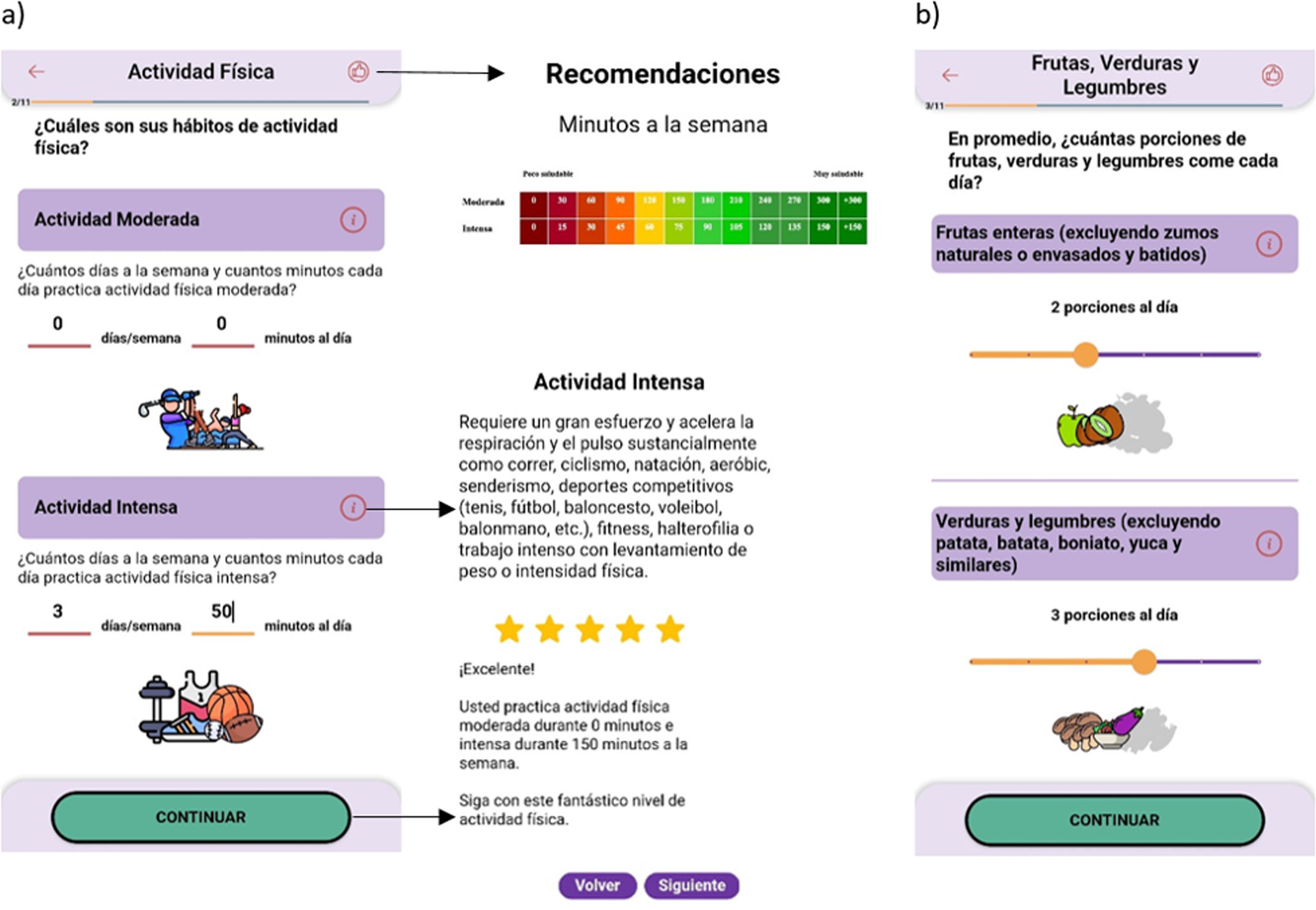
Consideration for varying levels of digital health literacy was a key principle in the user-centred design process. This was reflected in the use of simple language, intuitive icons, a linear navigation flow, and the provision of immediate assistance and definitions for all questions, ensuring the app is accessible to users with basic digital literacy. Users can access specific values for each evaluated recommendation, through a “thumbs-up” icon. Additionally, an “information” icon delivers additional details to assist users in providing accurate answers. For example, for food intake questions clarifies which specific foods include each category and details what constitutes one portion (Table S1 in Supplementary Material).
An infographic addressing cancer myths and controversies is also downloadable, as well as two automated reports based on user-provided answers:
Summary of results: overview of content and adherence to each individual recommendation, along with a global adherence score calculated as an average of individual marks rounded to the nearest 0.5.
Full report: detailed information about the user's overall score, individual recommendations’ results, definition of WCRF/AICR recommendations, predefined personalized advice based on individual and global recommendation scores obtained, and scientific evidence.
All these materials are based on the 2018 WCRF/AICR report7,8 and other official Spanish guidelines on nutrition19 and physical activity.20 The content was tailored to Spanish lifestyle and dietary habits, as well as synthesized and written in plain language by the research team described above.
- 4)
Expert review and development
The already mentioned panel of experts evaluated PreveCan's content through a structured validation process. Each expert independently assessed materials, questions, and scoring for relevance, clarity, and accuracy. Their main suggestions (which were all incorporated), included: simplifying the wording in the questions, answers and additional materials for a lay audience; improving the visibility of the “information” icons on each question screen; and correcting some typos or errors in the scoring system.
The app was developed for Android and iOS using the open-source Flutter SDK,21 with multiple revisions by the expert panel before the final beta release. PreveCan is registered as intellectual property (ID: 2307274909373-9V5B6A).
Usability studyTo assess PreveCan's suitability for the general population, we conducted a cross-sectional usability study using the mHealth App Usability Questionnaire (MAUQ) designed and validated by Zhou et al.22 that was adapted and translated to Spanish. The MAUQ was selected over other tools due to its specificity for mHealth apps and its multi-dimensional assessment of ease of use and satisfaction, information layout, and overall usefulness. Participants were recruited via snowball sampling, a method chosen for its practicality in rapidly reaching a sufficient number of participants within the study's timeframe (March 15 to June 30, 2022). Eligible participants were adults (≥18) with at least 3 years’ experience using smartphones and fluency in Spanish. Experience using smartphones was self-reported by participants in the eligibility pre-screening. After completing all app sections, users were invited to complete a web-based questionnaire covering demographics (age, sex, region, education, focal group, and cancer family history) and 20 usability questions (scored 1–5), grouped into ease of use and satisfaction, information layout, and overall usefulness (see Annex I in Supplementary Material).
- 1)
Statistical analyses
Participant's characteristics were described using means and standard deviations for continuous variables and number of cases and percentages for categorical variables.
Total score, and the score for each of the three sections evaluated (ease of use and satisfaction, information layout, and overall usefulness), were summarized with the median and interquartile range (IQR), since distribution of data was not symmetrical. Differences by sex, education, family history and professional background were assessed with these statistics and the U-Mann-Whitney test. The individual scores obtained in each of the 20 questions (ranged 1–5) were grouped into three categories (≤3, 4 and 5), and were described with number of cases and percentages. Differences between groups were assessed with the Fisher exact test.
- 2)
Corrections
The results of the usability study informed some modifications to the PreveCan-Beta version, resulting in the improved final version of the instrument. After these corrections were implemented, the final version underwent a new round of content validation by the panel of experts to ensure that the changes maintained the instrument's relevance, clarity, and coherence.
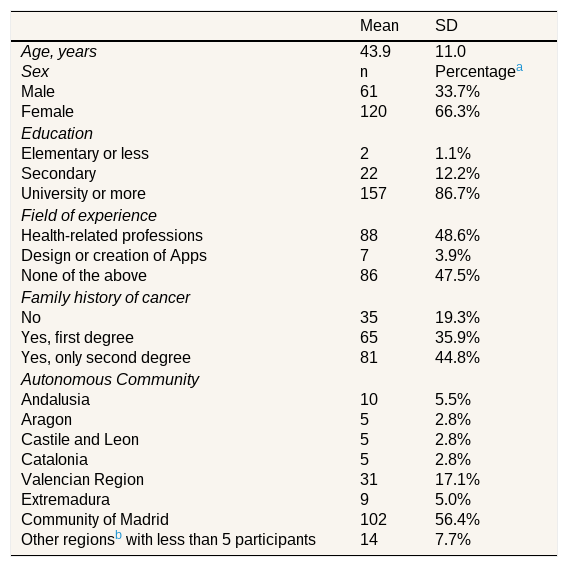
ResultsUsability study resultsWe recruited 181 participants with a mean age of 44 years (range: 21–74), mainly women (66%), with 87% having university education or higher. Almost half were engaged in professions unrelated to health or app development. Additionally, 36% had first-degree relatives with cancer. Most participants were from Madrid (56%) and Valencian Region (17%) (Table 2).
Characteristics of the usability study participants.
| Mean | SD | |
|---|---|---|
| Age, years | 43.9 | 11.0 |
| Sex | n | Percentagea |
| Male | 61 | 33.7% |
| Female | 120 | 66.3% |
| Education | ||
| Elementary or less | 2 | 1.1% |
| Secondary | 22 | 12.2% |
| University or more | 157 | 86.7% |
| Field of experience | ||
| Health-related professions | 88 | 48.6% |
| Design or creation of Apps | 7 | 3.9% |
| None of the above | 86 | 47.5% |
| Family history of cancer | ||
| No | 35 | 19.3% |
| Yes, first degree | 65 | 35.9% |
| Yes, only second degree | 81 | 44.8% |
| Autonomous Community | ||
| Andalusia | 10 | 5.5% |
| Aragon | 5 | 2.8% |
| Castile and Leon | 5 | 2.8% |
| Catalonia | 5 | 2.8% |
| Valencian Region | 31 | 17.1% |
| Extremadura | 9 | 5.0% |
| Community of Madrid | 102 | 56.4% |
| Other regionsb with less than 5 participants | 14 | 7.7% |
SD: standard deviation.
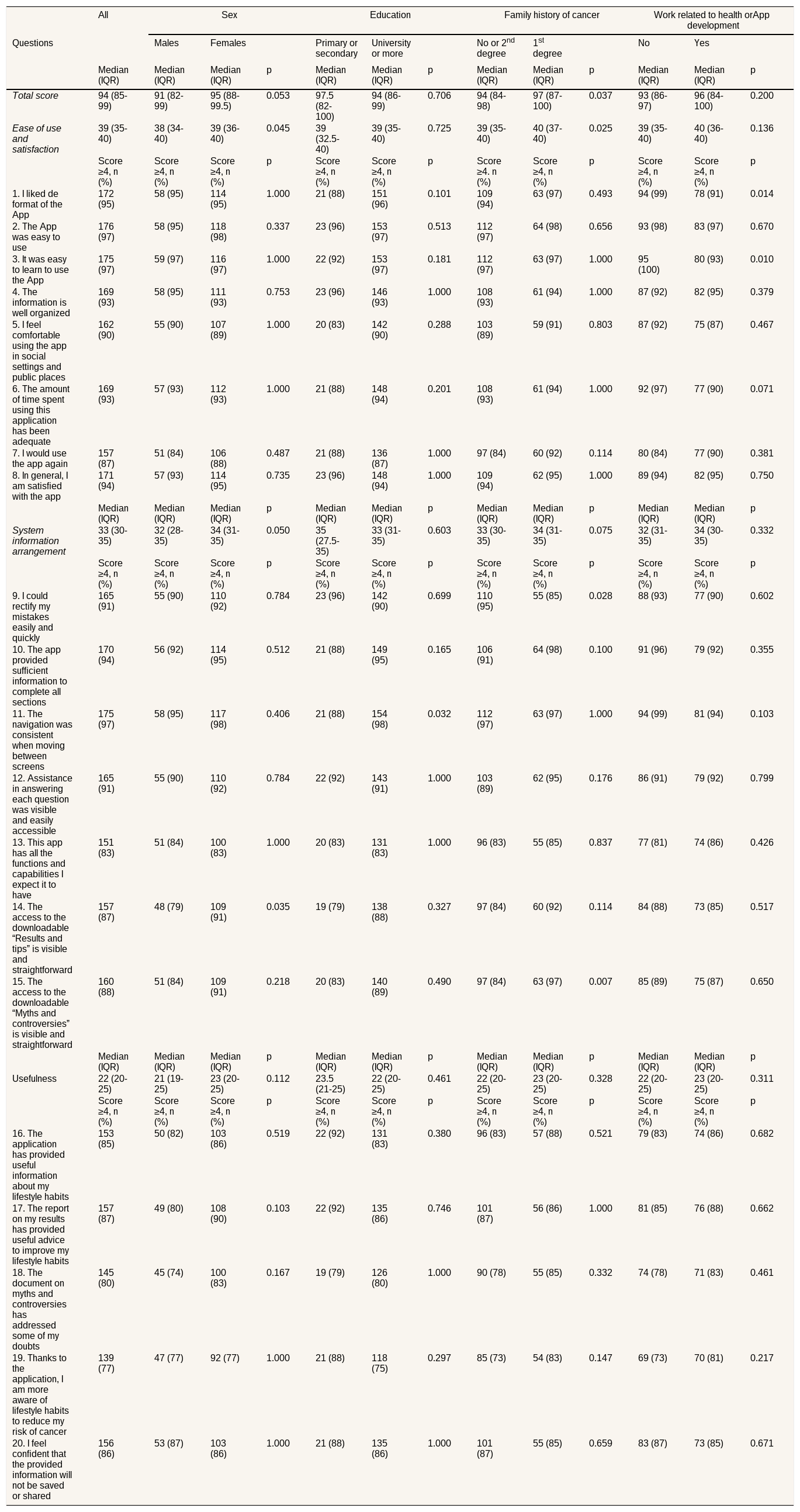
Overall, user satisfaction with PreveCan (Table 3) was high, with a median score of 94 out of 100 (IQR: 85-99). Women (median: 95; IQR: 88-99.5) and individuals with first degree family history of cancer (median: 97; IQR: 87-100) reported slightly higher satisfaction. Ease of use and satisfaction also rated highly (39 over 40; IQR: 35-40), especially among females (median: 39; IQR: 36-40) and for those with first degree family history of cancer (median: 40; IQR: 37-40). The items from this section got scores of 4 or more from, at least, 87% of participants. Ease of use and learning were particularly well rated, with 85% of participants giving the maximum score of 5 (Table S2 in Supplementary Material). However, the possibility of using the app again received a lower score, with 13% of participants assigning a score <4. The information arrangement received a total score of 33 out of 35 (IQR: 30-35), again higher among females and individuals with first degree relatives that had cancer (median: 34; IQR:31-35, in both cases). While either satisfaction with ease to rectify errors, the information provided to respond questions and the consistency of the navigation was very high in at least 87%% of participants, functions and capabilities of PreveCan can be improved (17% of the participants assigned a score <4). The usefulness of the app was scored with 22 out of 25 (IQR: 20-25), with no differences among groups. Although at least 77% of users scored ≥4 points in at least one of the items of the usefulness section, satisfaction was comparatively lower in this area. At least 20% of the sample scored with <4 points the usefulness of the myths and controversies document, and the ability of PreveCan to improve knowledge about lifestyle habits.
Degree of satisfaction with the ease of use, information arrangement and utility of PreveCan app.
| All | Sex | Education | Family history of cancer | Work related to health orApp development | |||||||||
|---|---|---|---|---|---|---|---|---|---|---|---|---|---|
| Questions | Males | Females | Primary or secondary | University or more | No or 2nd degree | 1st degree | No | Yes | |||||
| Median (IQR) | Median (IQR) | Median (IQR) | p | Median (IQR) | Median (IQR) | p | Median (IQR) | Median (IQR) | p | Median (IQR) | Median (IQR) | p | |
| Total score | 94 (85-99) | 91 (82-99) | 95 (88-99.5) | 0.053 | 97.5 (82-100) | 94 (86-99) | 0.706 | 94 (84-98) | 97 (87-100) | 0.037 | 93 (86-97) | 96 (84-100) | 0.200 |
| Ease of use and satisfaction | 39 (35-40) | 38 (34-40) | 39 (36-40) | 0.045 | 39 (32.5-40) | 39 (35-40) | 0.725 | 39 (35-40) | 40 (37-40) | 0.025 | 39 (35-40) | 40 (36-40) | 0.136 |
| Score ≥4, n (%) | Score ≥4, n (%) | Score ≥4, n (%) | p | Score ≥4, n (%) | Score ≥4, n (%) | p | Score ≥4. n (%) | Score ≥4, n (%) | p | Score ≥4, n (%) | Score ≥4, n (%) | p | |
| 1. I liked de format of the App | 172 (95) | 58 (95) | 114 (95) | 1.000 | 21 (88) | 151 (96) | 0.101 | 109 (94) | 63 (97) | 0.493 | 94 (99) | 78 (91) | 0.014 |
| 2. The App was easy to use | 176 (97) | 58 (95) | 118 (98) | 0.337 | 23 (96) | 153 (97) | 0.513 | 112 (97) | 64 (98) | 0.656 | 93 (98) | 83 (97) | 0.670 |
| 3. It was easy to learn to use the App | 175 (97) | 59 (97) | 116 (97) | 1.000 | 22 (92) | 153 (97) | 0.181 | 112 (97) | 63 (97) | 1.000 | 95 (100) | 80 (93) | 0.010 |
| 4. The information is well organized | 169 (93) | 58 (95) | 111 (93) | 0.753 | 23 (96) | 146 (93) | 1.000 | 108 (93) | 61 (94) | 1.000 | 87 (92) | 82 (95) | 0.379 |
| 5. I feel comfortable using the app in social settings and public places | 162 (90) | 55 (90) | 107 (89) | 1.000 | 20 (83) | 142 (90) | 0.288 | 103 (89) | 59 (91) | 0.803 | 87 (92) | 75 (87) | 0.467 |
| 6. The amount of time spent using this application has been adequate | 169 (93) | 57 (93) | 112 (93) | 1.000 | 21 (88) | 148 (94) | 0.201 | 108 (93) | 61 (94) | 1.000 | 92 (97) | 77 (90) | 0.071 |
| 7. I would use the app again | 157 (87) | 51 (84) | 106 (88) | 0.487 | 21 (88) | 136 (87) | 1.000 | 97 (84) | 60 (92) | 0.114 | 80 (84) | 77 (90) | 0.381 |
| 8. In general, I am satisfied with the app | 171 (94) | 57 (93) | 114 (95) | 0.735 | 23 (96) | 148 (94) | 1.000 | 109 (94) | 62 (95) | 1.000 | 89 (94) | 82 (95) | 0.750 |
| Median (IQR) | Median (IQR) | Median (IQR) | p | Median (IQR) | Median (IQR) | p | Median (IQR) | Median (IQR) | p | Median (IQR) | Median (IQR) | p | |
| System information arrangement | 33 (30-35) | 32 (28-35) | 34 (31-35) | 0.050 | 35 (27.5-35) | 33 (31-35) | 0.603 | 33 (30-35) | 34 (31-35) | 0.075 | 32 (31-35) | 34 (30-35) | 0.332 |
| Score ≥4, n (%) | Score ≥4, n (%) | Score ≥4, n (%) | p | Score ≥4, n (%) | Score ≥4, n (%) | p | Score ≥4, n (%) | Score ≥4, n (%) | p | Score ≥4, n (%) | Score ≥4, n (%) | p | |
| 9. I could rectify my mistakes easily and quickly | 165 (91) | 55 (90) | 110 (92) | 0.784 | 23 (96) | 142 (90) | 0.699 | 110 (95) | 55 (85) | 0.028 | 88 (93) | 77 (90) | 0.602 |
| 10. The app provided sufficient information to complete all sections | 170 (94) | 56 (92) | 114 (95) | 0.512 | 21 (88) | 149 (95) | 0.165 | 106 (91) | 64 (98) | 0.100 | 91 (96) | 79 (92) | 0.355 |
| 11. The navigation was consistent when moving between screens | 175 (97) | 58 (95) | 117 (98) | 0.406 | 21 (88) | 154 (98) | 0.032 | 112 (97) | 63 (97) | 1.000 | 94 (99) | 81 (94) | 0.103 |
| 12. Assistance in answering each question was visible and easily accessible | 165 (91) | 55 (90) | 110 (92) | 0.784 | 22 (92) | 143 (91) | 1.000 | 103 (89) | 62 (95) | 0.176 | 86 (91) | 79 (92) | 0.799 |
| 13. This app has all the functions and capabilities I expect it to have | 151 (83) | 51 (84) | 100 (83) | 1.000 | 20 (83) | 131 (83) | 1.000 | 96 (83) | 55 (85) | 0.837 | 77 (81) | 74 (86) | 0.426 |
| 14. The access to the downloadable “Results and tips” is visible and straightforward | 157 (87) | 48 (79) | 109 (91) | 0.035 | 19 (79) | 138 (88) | 0.327 | 97 (84) | 60 (92) | 0.114 | 84 (88) | 73 (85) | 0.517 |
| 15. The access to the downloadable “Myths and controversies” is visible and straightforward | 160 (88) | 51 (84) | 109 (91) | 0.218 | 20 (83) | 140 (89) | 0.490 | 97 (84) | 63 (97) | 0.007 | 85 (89) | 75 (87) | 0.650 |
| Median (IQR) | Median (IQR) | Median (IQR) | p | Median (IQR) | Median (IQR) | p | Median (IQR) | Median (IQR) | p | Median (IQR) | Median (IQR) | p | |
| Usefulness | 22 (20-25) | 21 (19-25) | 23 (20-25) | 0.112 | 23.5 (21-25) | 22 (20-25) | 0.461 | 22 (20-25) | 23 (20-25) | 0.328 | 22 (20-25) | 23 (20-25) | 0.311 |
| Score ≥4, n (%) | Score ≥4, n (%) | Score ≥4, n (%) | p | Score ≥4, n (%) | Score ≥4, n (%) | p | Score ≥4, n (%) | Score ≥4, n (%) | p | Score ≥4, n (%) | Score ≥4, n (%) | p | |
| 16. The application has provided useful information about my lifestyle habits | 153 (85) | 50 (82) | 103 (86) | 0.519 | 22 (92) | 131 (83) | 0.380 | 96 (83) | 57 (88) | 0.521 | 79 (83) | 74 (86) | 0.682 |
| 17. The report on my results has provided useful advice to improve my lifestyle habits | 157 (87) | 49 (80) | 108 (90) | 0.103 | 22 (92) | 135 (86) | 0.746 | 101 (87) | 56 (86) | 1.000 | 81 (85) | 76 (88) | 0.662 |
| 18. The document on myths and controversies has addressed some of my doubts | 145 (80) | 45 (74) | 100 (83) | 0.167 | 19 (79) | 126 (80) | 1.000 | 90 (78) | 55 (85) | 0.332 | 74 (78) | 71 (83) | 0.461 |
| 19. Thanks to the application, I am more aware of lifestyle habits to reduce my risk of cancer | 139 (77) | 47 (77) | 92 (77) | 1.000 | 21 (88) | 118 (75) | 0.297 | 85 (73) | 54 (83) | 0.147 | 69 (73) | 70 (81) | 0.217 |
| 20. I feel confident that the provided information will not be saved or shared | 156 (86) | 53 (87) | 103 (86) | 1.000 | 21 (88) | 135 (86) | 1.000 | 101 (87) | 55 (85) | 0.659 | 83 (87) | 73 (85) | 0.671 |
IQR: interquartile range.
The full version comparting distribution of data among scoring ≤3, 4 and 5 is included in Table S2 in Supplementary Material.
Finally, the most recurrent free-text comments from users suggested that PreveCan should present a more unified and simpler response format and include more incentives to use the app regularly. While feedback on the unified and simpler response format was taken into account, the current version of PreveCan available on app stores is a static educational tool. It does not include incentives to use the app regularly such as personalized plans, alerts, statistics, check-ins or direct interaction with healthcare professionals. This design choice was made to ensure stability, privacy, and to focus the scope of this initial release on education and self-assessment. However, user feedback was and will be collected via the in-app suggestion box for consideration in future updates.
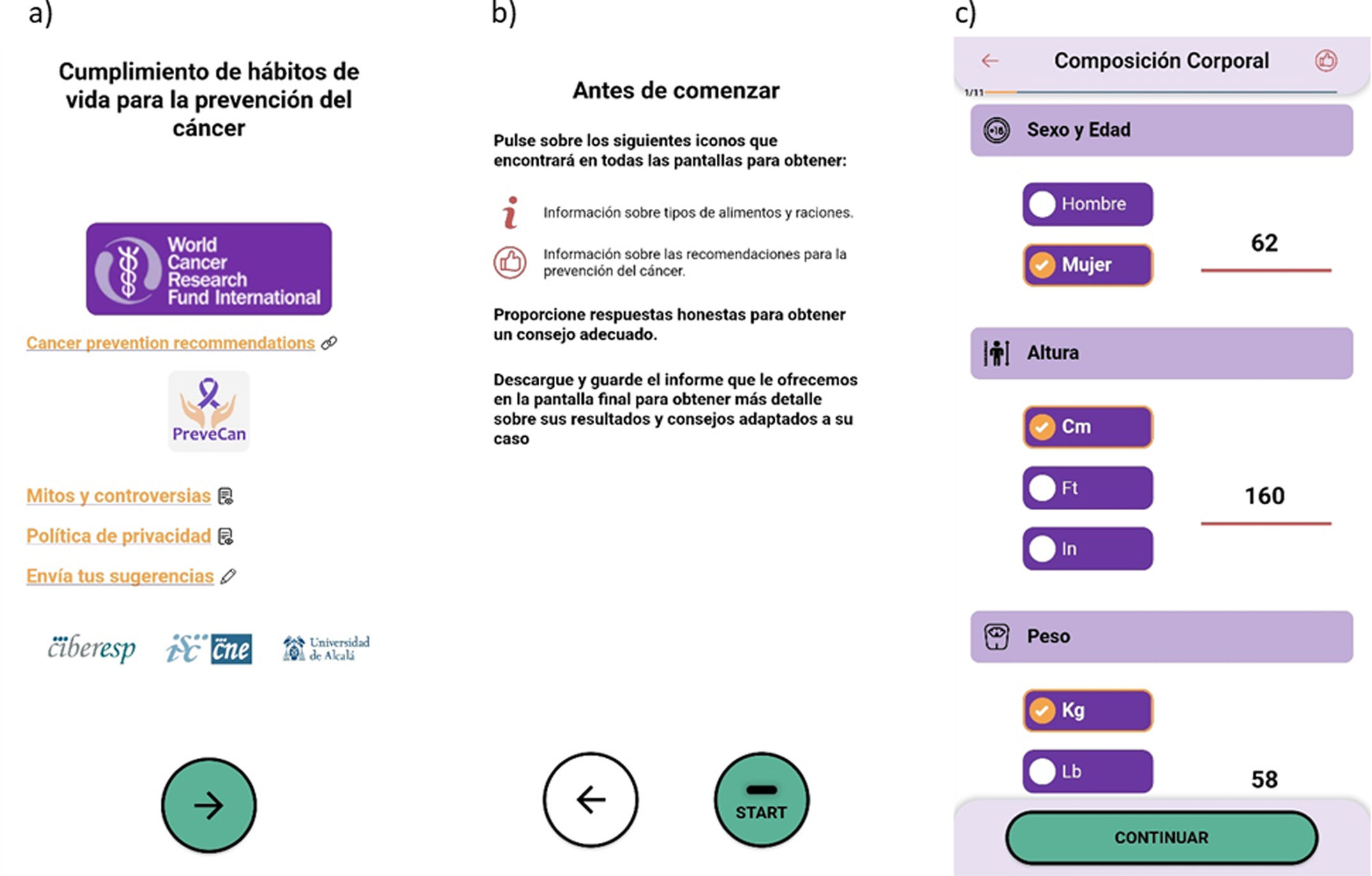
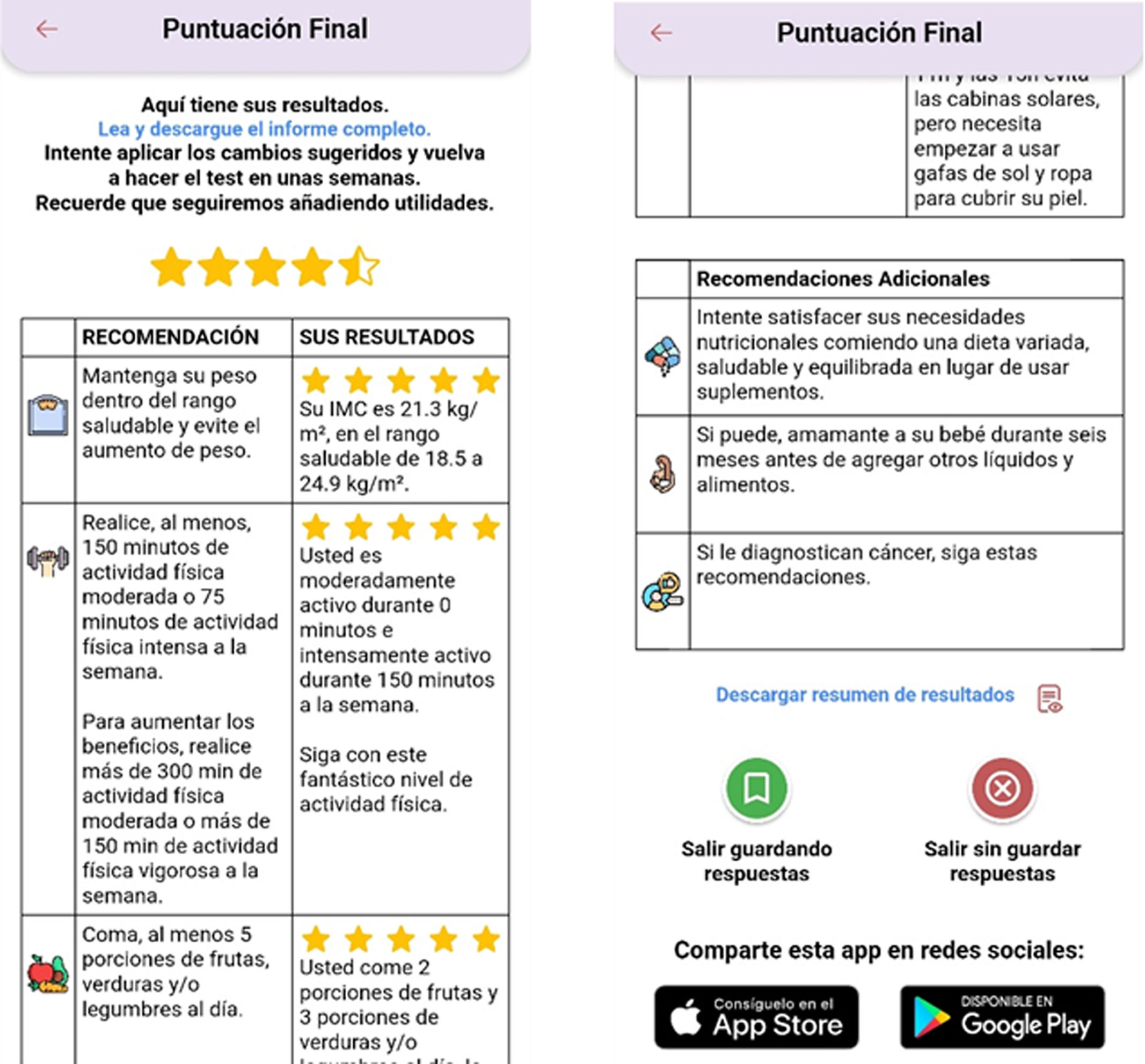
Final app versionAfter incorporating the most valuable feedback to PreveCan, the team tested the final design and additional corrections were implemented. The final version comprises 14 questions across 11 screens (Table 1 and Fig. 1). The initial screen introduces the app, provides access to resources (myths and controversies document, privacy policy, suggestions box), and the second (Fig. 1 B) offers instructions for optimal use. The questionnaire, starting from the third screen (Fig. 1C), collects demographic data (sex, age) to personalize recommendations and questions to evaluate the adherence to the WCRF/AICR recommendations (Fig. 2). A “thumbs up” button give access to information on the content of each specific recommendation and an “information” button offers assistance to answer the questions accurately. The “continue” button leads to the results for the adherence to each specific recommendation (Fig. 2 A). This process is the same for all questions outlined in Table 1 (Fig. 2 B). In the last screen, a summary of the results, additional recommendations, and links to the downloadable reports are presented (Fig. 3).


PreveCan allows users to save their answers locally for the next session or exit without saving. Finally, links to the app stores where PreveCan can be downloaded are provided to facilitate its dissemination and promote its use (Fig. 3).
PreveCan was made available through major app stores in October 2023, targeting a general audience interested in cancer prevention. Since its launch, the app has more than 3000 downloads, 2150 in Google Play23 and 1110 in Apple Store24. Periodical updates are carried out to adapt the application to the technical requirements of the digital stores. The app's launch was publicized in Spain through print media and radio.
DiscussionPreveCan is the first evidence-based Spanish-language mHealth app designed to inform users on adoption of lifestyles to reduce cancer risk. Developed by a multidisciplinary team, tested by final users and reviewed by experts, the app (freely available in Google Play and Apple Store) offers evaluation of the adherence to the 2018 WCRF/AICR cancer prevention recommendations, personalized advice to improve compliance and aggregated information on lifestyle and cancer. The usability study indicated high user satisfaction with ease of use, information arrangement and usefulness of PreveCan but concerns were raised about its long-term utility.
mHealth applications are transforming cancer care, covering the entire spectrum from prevention to end-of-life care. However, the applications have diverse designs,25,27 are mostly focused on oncology professionals or cancer patients28–30 and refer to a specific type of cancer.26,31 Those specifically designed for cancer prevention are not translated into Spanish, nor specifically adapted to the Spanish gastronomy.32,33 The WASABY app, currently under development, is a Spanish-language app based in the European Code Against Cancer (ECAC) but is targeting adolescents.34 The BUMPER project also intends to build a mobile application for cancer prevention based on the ECAC and is in the early steps of development.35
On the other hand, few cancer prevention apps share or link scientific literature, indicating a lack of academic and medical input.14,36 To address this, we prioritized using widely recognized and official sources to evaluate and provide reliable health recommendations.
While mHealth apps have the potential to enhance health literacy, concerns remain regarding unequal access to mobile technology, lack of familiarity or knowledge in using these apps, and privacy and security issues.37 Therefore, conducting usability studies before launching mHealth apps is crucial.
We have used a validated and adapted usability questionnaire22 to evaluate PreveCan, finding high user satisfaction with its ease of use, information arrangement, and overall usefulness. To our knowledge, no studies have presented and evaluated the usability of cancer prevention mobile applications based on official guidelines and directed to general population. Only one Spanish randomized controlled trial analysed the feasibility of a population-based cancer prevention education intervention via mHealth, based on the ECAC.38 Similar findings to ours have been observed in analogous usability studies of apps designed for cancer patients.36,37
Finally, to promote inclusivity, apps must serve diverse groups, including non-English speakers.25 Our Spanish-language app provides international cancer prevention recommendations tailored for Spain. While adapting it for other Spanish-speaking countries would be beneficial, its core content on nutrition and lifestyle is broadly applicable. This is particularly relevant given that Spanish is the world's second most spoken native language and third most used online.39
While PreveCan offers an easy to use, well-structured and useful tool for communicating lifestyle recommendations for cancer prevention, some limitations should be considered. Firstly, the app currently does not include questions on supplement intake as this information is challenging to collect without making PreveCan too cumbersome. Furthermore, the app does not collect information to evaluate recommendations for breastfeeding and post-cancer diagnosis but this apply only to a subset of the population and do not fully represent modifiable lifestyle behaviours. However, information about these recommendations is included in the downloadable reports. Another noteworthy limitation of PreveCan is its low interventionist nature, likely reducing engagement in not highly motivated users. To expand its reach to a broader audience, future versions will incorporate active features based on core behaviour change strategies, including goal setting, registries, self-monitoring with progress tracking, check-ins, personalized feedback with virtual rewards, support through educational content or problem-solving tools, and social features like group challenges to foster motivation and sustained engagement. Additionally, PreveCan could benefit from adaptation to other countries by incorporating region-specific languages, foods, drinks and portions. Furthermore, the MAUQ used was originally developed in English. While the Spanish version of the MAUQ had not yet been validated when this study was conducted, it was later validated with highly positive outcomes.40 Furthermore, it was carefully expert-reviewed to ensure clarity and cultural relevance and the original English version has been validated and widely used.22 In addition, the usability study used convenience sampling, recruiting respondents close to the authors’ environment, which may have introduced bias from overly favourable feedback. To mitigate this, the invitation to participate stated that the objective was to improve the app, which likely encouraged constructive criticism, as evidenced by the numerous valuable suggestions received. In addition, the relatively small sample size (181 participants) and the use of snowball sampling may limit the generalizability of the findings. This recruitment approach contributed to an overrepresentation of women, highly educated individuals, and healthcare professionals, as well as participants from the same Autonomous Community. To address these last two limitations, the app includes a suggestion box to collect feedback from a broader user base once PreveCan is launched, which could inform future versions of PreveCan. Despite these limitations, PreveCan represents a significant step towards promoting cancer prevention in Spanish-speaking populations. By addressing these limitations and incorporating user feedback, future versions can further enhance PreveCan effectiveness and reach.
This study presents some important strengths. To our knowledge, PreveCan is the first Spanish-language cancer prevention app based on the WCRF/AICR recommendations, adapted to Spain-specific types of foods and portions. The questions included were designed in alignment with a validated short screener to evaluate adherence to the same recommendations.18 The usability of PreveCan has been evaluated using a questionnaire that, in addition to being flexible, has demonstrated the reliability and validity necessary to evaluate the usability of mHealth applications.22 Being a mobile app, it is easier to use and accessible from anywhere and at any time, compared to the WCRF cancer health check tool,7 that is a web calculator within a large website. Websites load content more slowly, and offer a less fluid experience compared to mobile apps. Additionally, PreveCan provides valuable information on cancer statistics, the scientific link between lifestyle and cancer risk, and clarifies common misconceptions. Given that half of all cancer cases could be prevented by adopting healthy lifestyle habits3 and the importance of adhering to international recommendations for cancer prevention post-diagnosis,4 the widespread use of PreveCan could be a valuable tool for reducing cancer incidence and mortality. This is especially relevant in Spain, where nutritionists or physical activity experts are not fully integrated into the healthcare system, both public and private.
ConclusionsPreveCan is a valuable, evidence-based, user-friendly, and free mobile tool that and offers guidance to improve lifestyles and reduce cancer risk in a simple and interactive way by assessing compliance with international recommendations for cancer prevention.
Availability of databases and material for replicationThe datasets generated and analyzed for this study are not publicly available because of data protection considerations but are available from the corresponding author upon reasonable request and subject to prior approval by the Ethics Committee of the Carlos III Institute of Health.
Existing applications for cancer prevention are entitled to cancer patients or professionals, refer to a specific type of cancer or do not tailor Spanish population. Two apps similar to PreveCan are under development: WASABY targeting adolescents and BUMPER in the early steps of development.
What does this study add to the literature?PreveCan is the first application for cancer prevention tailored for Spanish general population.
What are the implications of the results?With its strong usability results, PreveCan represents a significant step towards promoting cancer prevention through education, which is crucial in a country like Spain with low awareness of lifestyle cancer risk factors.
Salvador Peiró.
Transparency declarationThe corresponding author, on behalf of the other authors guarantee the accuracy, transparency and honesty of the data and information contained in the study, that no relevant information has been omitted and that all discrepancies between authors have been adequately resolved and described.
Authorship contributionsE. Ruiz-Moreno, J. García-Pérez, V. Lope, M. Pollán and A. Castelló contributed with the conceptualization and design of PreveCan and the usability study. O. Núñez, M. González-Sánchez, A. Chaplin, D. Romaguera and P. Fernández-Navarro revised the beta version and contributed to its improvement. A. Castelló secured funding for and administered the project. E. Ruiz and A. Castelló acquired, curated, analysed, interpreted the data, and wrote the original draft of the paper. All authors reviewed, edited and approved the final version of the paper. All authors agree to be accountable for all aspects of the work to ensure that the questions related to the accuracy or integrity of any part of the work are appropriately investigated and resolved.
FundingThis work was supported by the Alcala University and the Community of Madrid (CM/JIN/2019-042), Carlos III Institute of Health, and the CIBERESP. The sponsors did not play any role in relation to the study design, collection, analysis and interpretation of data, writing of the report or decision to submit the article for publication.
Conflicts of interestNone.